
Reaching people where healthcare is often missing
Sarvamangal is an education trust that works closely with local communities. Over the years, we have seen that health problems often affect education, work, and daily life. When people are not well, children miss school, and adults struggle to earn a living. Because of this, Sarvamangal started working in the area of community health camps along with education.
Community Health Camps are one of the main ways we reach people directly. That is why we began organising community health camps. These camps help us reach people directly and offer simple checkups and guidance in a space where they feel comfortable and supported.
Community Health: Small Steps That Make Daily Life Easier
Community health is not about big hospitals or complex treatments. Instead, it focuses on small, timely care. Care that reaches people where they feel safe. While working with local communities, Sarvamangal Education Trust has noticed a common pattern.
As a result, many people ignore health problems for a long time. They continue working even when they feel unwell. Children go to school despite pain, weakness, or constant tiredness.
Over time, these issues are considered normal and remain untreated until they become serious. This is where community health becomes important.
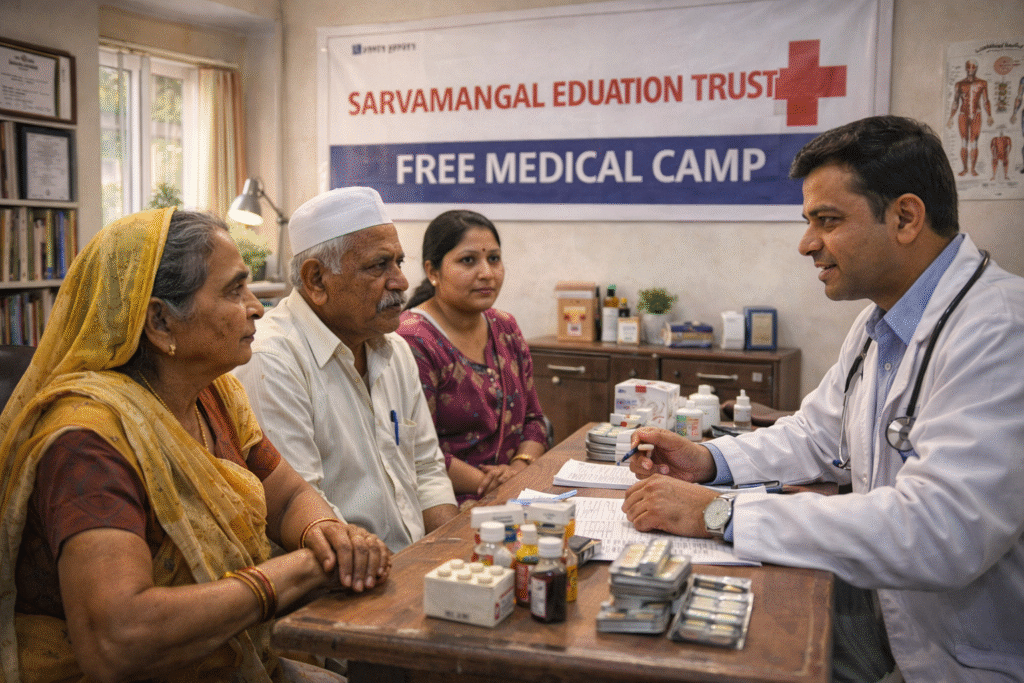
What Community Health Looks Like on the Ground
In many areas, healthcare feels distant. Hospitals are far, and clinics are crowded. Visiting a doctor often means losing a day’s income. Because of these challenges, community health programs bring basic care closer to home.
Health camps, awareness sessions, and simple screenings help people understand their health without fear or cost. At first, people come slowly. Many watch from a distance. Gradually, they step in, ask questions, and sit down for a checkup.
Health Camps at the Community Level
In many places, people don’t visit hospitals for small problems. Instead, they wait until the issue becomes serious. Sometimes the hospital is far. At other times, money becomes a concern.
In addition, fear also plays a role. Because of this, small health issues often get ignored. So instead of expecting people to travel, Sarvamangal Education Trust brings the health camp to them.
We organise camps inside the community — in a school room, a community hall, or even an open ground. These are places where people already feel comfortable. Moreover, there is no appointment system in place. Anyone can come and get checked.
At these camps, we provide:
- Blood pressure checks
- Blood sugar tests
- General health checkups
- Doctor consultations
- Basic medicines
Screenings & Real Outcomes: What We See on the Ground
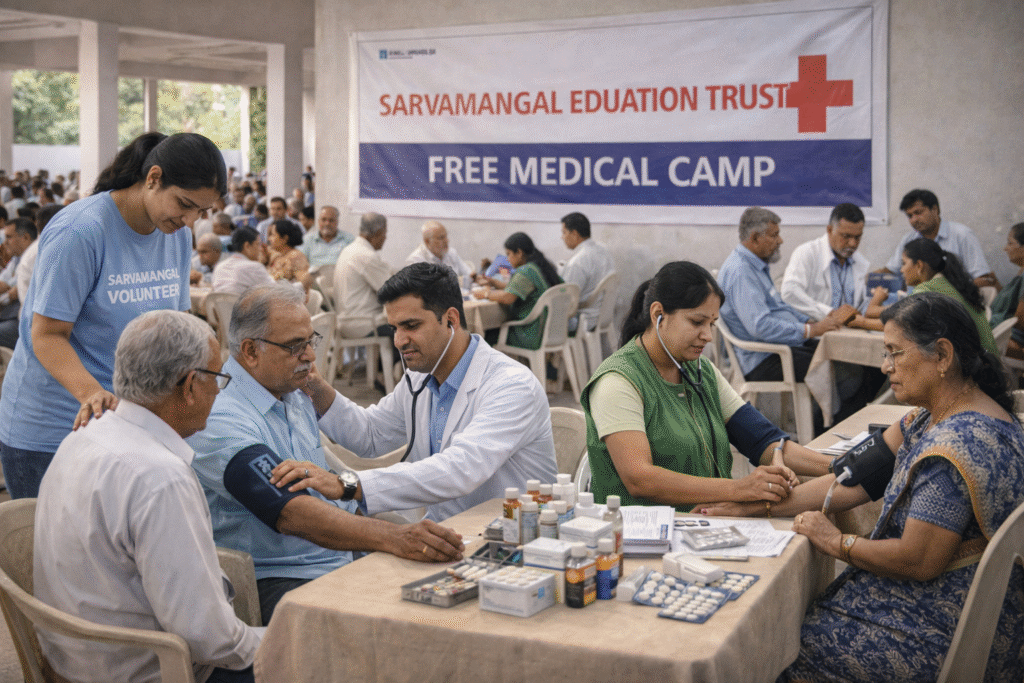
When we talk about health screenings, it often sounds like numbers and reports. However, on the ground, screenings look very different. They look like people waiting patiently.
They look like nervous questions. They also bring visible relief when someone finally understands what is happening to their body.
At Sarvamangal, an education trust working closely with communities, screenings are not just a process. Instead, they become conversations that slowly change how people think about their health.
Why Screenings Matter More Than We Realise
In many communities, people live with health issues for years without knowing it. They continue working, managing homes, and sending children to school even when their bodies are struggling. Often, most people say the same thing:
“I didn’t think it was serious.”
For this reason, health screenings help catch problems early before they turn into emergencies. A simple blood pressure or sugar test can prevent long-term damage.
What Screenings Look Like in Real Life
Screenings at our community health camps are simple. There is no rush and no pressure. People come in slowly, often with questions. Some arrive alone, while others come with family members. In fact, many older people feel hesitant at first.
The most common screenings include:
- Blood pressure
- Blood Sugar
- BMD checkup
- Blood test
- General health checks
Orthopedic & Bone Health Screening
As the screenings continued, many people began reporting joint and back pain. They shared that they had been living with it for years, but never got it checked. In many cases, they assumed it was just part of ageing.
After speaking with the orthopedic doctor, people realised the pain should not be ignored. Additionally, a few went for the BMD checkup, mostly women and older people. For most of them, this was the first time anyone explained bone health clearly and simply.
Role of Volunteers in the Process
Volunteer training plays a quiet but important role in screenings. Volunteers guide people from one checkup to another. They explain where to go and what will happen next. Most importantly, they listen.
“I was scared at first, but the volunteer stayed with me.”
What Screenings Change Over Time
When screenings happen regularly, communities slowly change. People begin to talk about health more openly. Soon, they start asking questions. Gradually, they stop ignoring symptoms.
As an education trust, Sarvamangal believes awareness is as important as treatment. Therefore, screenings help people understand their own bodies and take responsibility for their health.
Looking Ahead
Community health camps will continue to be a core part of Sarvamangal’s work. In the long run, they help people take action before small problems become serious.
Real outcomes begin with simple checks, honest conversations, and care that reaches people where they are.
Beneficiary Stories: Real People, Real Health Changes
Community health programs are not just about numbers or reports. Instead, they are about people — their fears, questions, and small but meaningful health changes.
Below are a few real-life style beneficiary stories that show how screenings make a difference on the ground.
Voices from the Community
“I Thought I Was Fine”
“I came only because my friend insisted. I felt normal and had no pain.
When the doctor checked my blood pressure, they told me it was high.
They explained calmly and asked me to take it seriously.
If this camp were not here, I would have never known.”
— Resident of the area
A Comfortable First Experience
“Hospitals make me nervous. I don’t understand medical language.
Here, the doctor spoke slowly and explained everything in simple words.
I felt relaxed and asked questions without fear.”
— A woman who attended the screening
More Than Just Screenings
These camps were not rushed.
Doctors and volunteers took time to talk, listen, and explain.
Small conversations made people feel seen and respected.
- basic health awareness
- clarity about next steps
- confidence to seek medical help
Real Outcomes We Could See
The impact was visible
- People discussing health open
- Neighbours encouraging each other to attend
- Follow-up visits increasing
- Fear around health checkups is slowly reducing
These are small changes, but they matter.
FAQs
Q1: What do community health screenings usually include?
Community health screenings usually include basic checkups such as blood pressure, blood sugar, and general health. In some camps, people can also consult doctors for joint pain, bone health, and other common problems. The idea is to keep it simple and accessible.
Q2: Why are health screenings important for communities?
Many people live with health issues without knowing it. Screenings help find problems early, before they become serious. Even a small check can help someone take action at the right time.
Q3: Who can attend these health camps?
Anyone from the community can attend. People of all ages come in, including women, older residents, and working adults. No prior appointment is usually needed.
Q4: What is an orthopedic checkup in a health camp?
An orthopedic checkup focuses on joint pain, back pain, and movement issues. People who have been living with pain for a long time often realise during these checkups that their problem can be managed.
Q5: What is a BMD checkup, and who needs it?
A BMD checkup looks at bone strength. It is especially helpful for women and older people. Many people learn about bone health for the first time during these screenings.